Autopsy of a Colony

Canada

Just like a real autopsy finds the cause of death, we examined how colonization destroyed the Indigenous nations that lived here long before Europeans arrived.

Presented by

Memphis, Dhyan & Willie

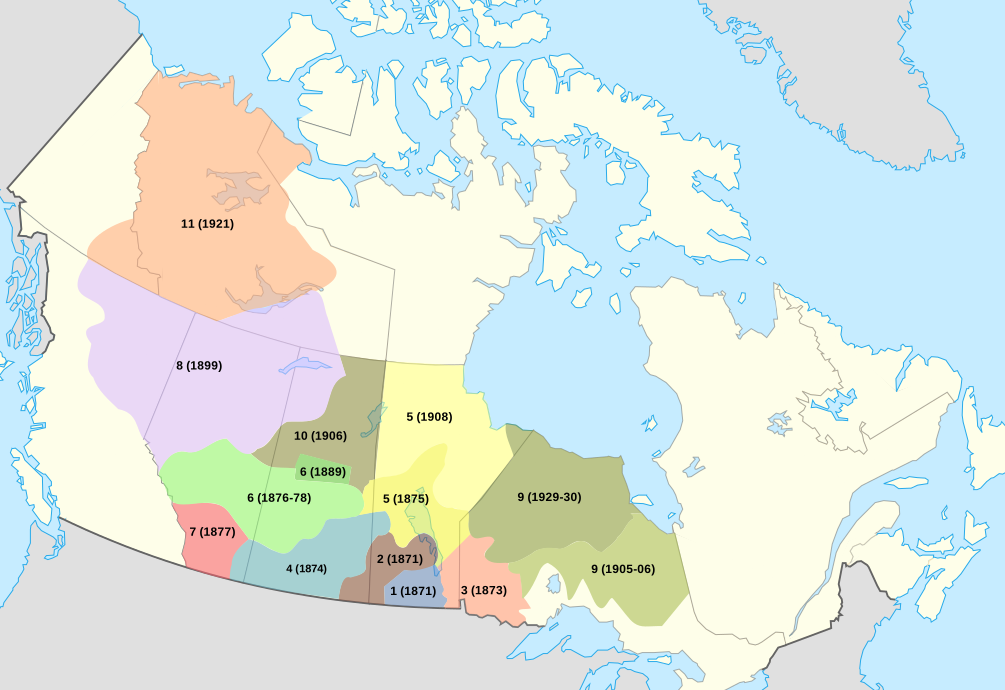
Historical map of Indigenous Canadian territories

Map of Indigenous territories and treaties in Canada

01

Before Colonization

Canada was home to hundreds of thriving Indigenous nations with their own governments, languages and cultures.

  • The Haudenosaunee Confederacy was governed by the Great Law of Peace, a democratic constitution that influenced governments across North America.
  • Indigenous peoples created totem poles, birchbark canoes, kayaks and igloos.
  • Plains nations hunted buffalo and used tipis while the Wendat farmed corn, beans and squash called the Three Sisters.
  • Women held enormous power as clan mothers who could choose and remove chiefs.
  • Trade networks stretched across the continent exchanging obsidian, chert and copper.
Indigenous chief in traditional clothing

North Piegan Chief in traditional regalia, c. 1900

02

First Contact

1497

John Cabot reached Canada for England

1535

Jacques Cartier sailed the Saint Lawrence River for France

At first Europeans were completely dependent on Indigenous peoples to survive, learning how to hunt and navigate the land.

The fur trade became the foundation of early Canadian economy with settlers and First Nations trading beaver pelts.

As European power grew this relationship shifted from cooperation to domination.

Portrait of Jacques Cartier

Jacques Cartier, the French explorer who claimed Canada for France
03

Colonization Takes Hold

  • The fur trade forced Indigenous nations to compete for trade routes and created dependency on European goods.
  • Missionaries tried to erase Indigenous spirituality.
  • The Royal Proclamation of 1763 gave Britain total control over all land.
  • The Numbered Treaties between 1871 and 1921 deceived Indigenous leaders into signing away their land permanently.
  • The Indian Act of 1876 banned sacred ceremonies, replaced traditional governments with band councils and confined nations to reserves.
  • The government deliberately wiped out the buffalo to starve communities into submission.
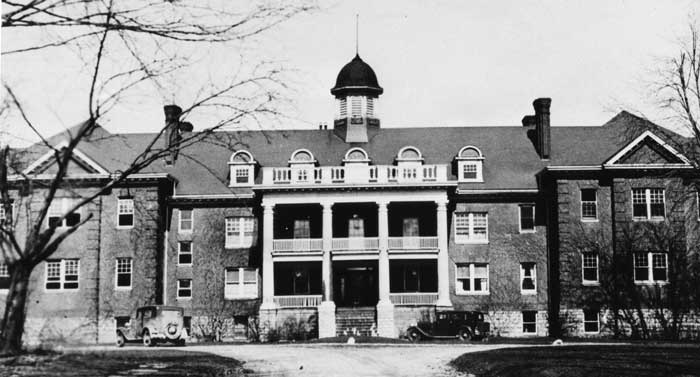
  • The residential school system began in the 1880s removing over 150,000 Indigenous children from their families with the last school closing in 1996.
Mohawk Institute Residential School

Mohawk Institute Residential School, Brantford, Ontario, 1932

04

Resistance

Tecumseh

Built an intertribal confederacy and in 1812 helped defeat 2,500 Americans at the siege of Detroit.

Louis Riel

Led two Métis rebellions, established a provisional government in 1869 and was executed in 1885, remaining a symbol of Métis resistance today.

Even through residential schools Indigenous peoples secretly preserved their languages and ceremonies despite government bans.

Portrait of Louis Riel

Louis Riel, Métis leader and founder of Manitoba

05

Path to Independence

1867

Britain formed the Dominion of Canada giving Canadians their own parliament.

1920s

Canada began asserting independence by signing its own treaties and opening embassies.

1931

The Statute of Westminster gave full legal autonomy.

1982

Canada finally achieved complete independence by adopting its own constitution and cutting all legal ties to Britain.

Parliament of Canada

Parliament Buildings, Ottawa, 1901

06

Legacies Today

Canada is one of the wealthiest nations in the world known for multiculturalism and high quality of life.

However Indigenous communities still face poverty rates nearly double the national average and dozens of reserves had no clean drinking water as of 2021.

  • The Indian Act remains partially in force
  • Most of the 94 TRC Calls to Action from 2015 are still unimplemented
  • In 2021 unmarked graves were discovered at residential school sites shocking the entire nation
  • Indigenous youth continue fighting against oil pipelines threatening their ancestral lands

Canada remains a country of deep contradiction, prosperous on the world stage but unfinished in confronting the damage done to the original nations it was built upon.

Spirit Catcher memorial with children's shoes

Spirit Catcher memorial adorned with children's shoes, 2021

07